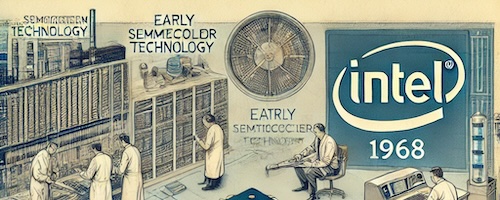
1968
Intel Founded
Robert Noyce and Gordon Moore rename NM Electronics to Intel Corporation.
This decision lays the foundation for decades of technological innovation.

Intel Sustainability
Explore Intel's journey through time, discovering how our commitment to innovation has shaped a more sustainable future for technology and our planet.
Explore the TimelineExplore the milestones that have shaped Intel's approach to sustainability.
1968
Robert Noyce and Gordon Moore rename NM Electronics to Intel Corporation.
This decision lays the foundation for decades of technological innovation.
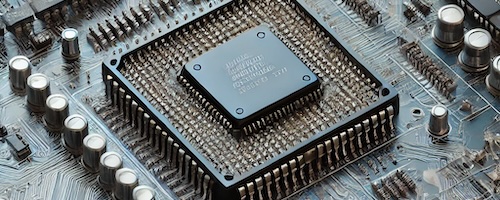
1971
Intel debuts the 4004, the world's first commercial microprocessor.
The 4004 ignites the microprocessor revolution and changes computing forever.
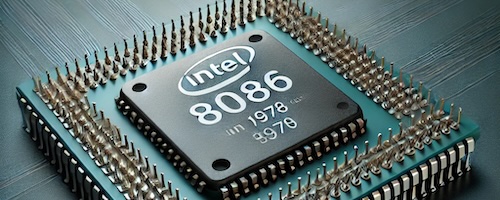
1978
The 8086 processor establishes the x86 architecture.
This architecture goes on to drive countless PCs and servers.
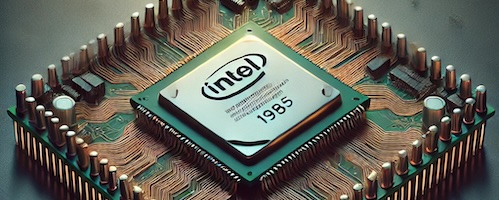
1985
Intel introduces the 386 processor with 32-bit architecture.
The chip brings better performance and multitasking to personal computers.

2006
Intel reaches its highest annual greenhouse gas emissions for operations.
The company responds with investments in abatement, renewable energy, and efficient manufacturing.
.png)
2020
Intel launches its Responsible, Inclusive, Sustainable, Enabling strategy.
The 2030 goals focus on climate action, water stewardship, and waste reduction.
2022
Intel commits to net-zero Scope 1 and 2 emissions across global operations.
The commitment builds on years of environmental initiatives.
2023
Intel achieves 99% renewable electricity usage worldwide.
This helps lower carbon emissions and advances its long-term goals.

2024
Intel hosts its first Sustainability Summit.
Suppliers, officials, and industry leaders collaborate on sustainable manufacturing.
Learn more about the areas that support Intel’s approach to building a more sustainable future.
Get the latest updates on Intel’s sustainability progress and initiatives.
Scroll to view timeline | Hover over cards to learn more!